Latest Articles

- Details
- Projects
The Kremlin complex:
- Details
strengths and weaknesses of the Putin regime
“Russia is never as strong as she looks, nor as weak as she looks.” This old adage underscores the Russian state’s ambiguous and opaque nature. A conflicting combination of strengths and weaknesses makes Russia difficult to comprehend not only in the West, but also within the country. The difficulties of “reading” Russia are not a new problem for the West, but its relevance today has grown due to Russia’s integration into the global economy, the emerging crises in the developed democracies, and the Russian leadership’s drive to gain geopolitical influence.
What is to be done?
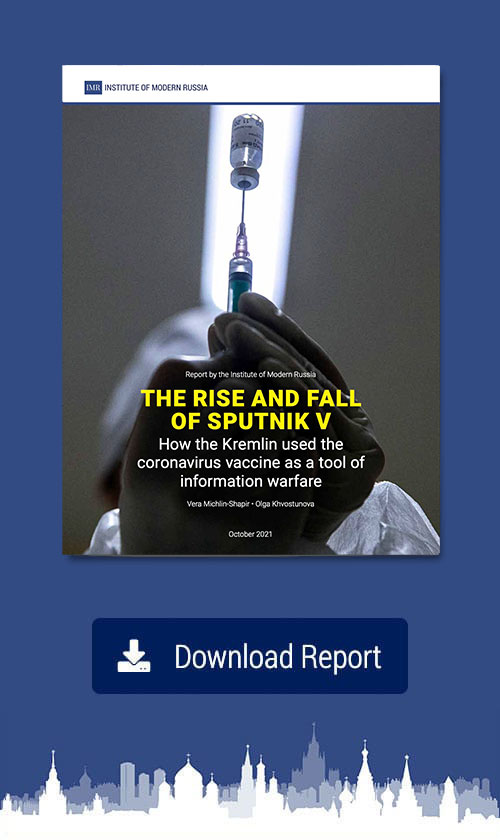
To answer this question, the Institute of Modern Russia has launched a new research dedicated to examining the strengths and weaknesses of the Putin regime and identifying myths and misconceptions about Russia in the Western public discourse. By unearthing the root contradictions, we hope to develop practical recommendations for Western policymakers, experts, and Russia observers at large. The first report in the series focuses on the Kremlin’s information strategies to promote the Sputnik V vaccine.
- Details
- Projects
Russia under Putin
- Details
What the last 20 years look like for the country
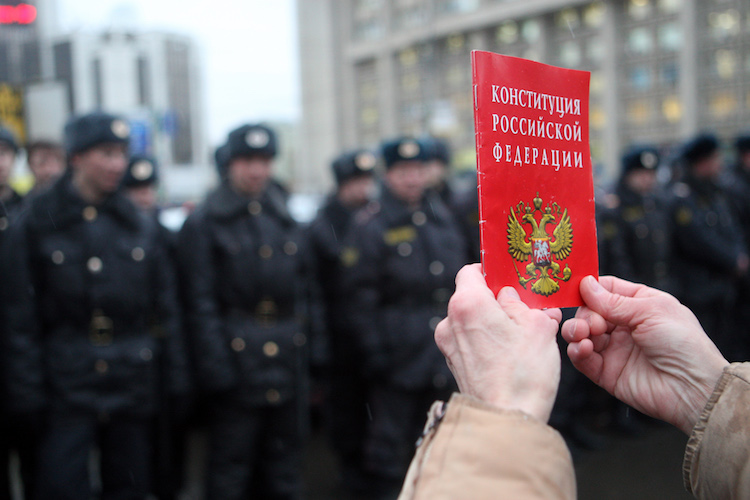
Vladimir Putin has been ruling Russia for more than 20 years. During this time he has created a sustainable authoritarian system, a targeted repression apparatus, and a powerful propaganda machine—all of which allow him to compete with relative success both inside Russia and abroad. To mark this grim milestone, IMR launched “Russia under Putin” project to take a bird’s-eye view of the last two decades, focusing on social and political developments that are often found beyond the narratives related to Putin.
The project is organized in two parts. The first part is a series of three reports dedicated to Russian civil society forces that operate under authoritarian conditions—protest movement, civil society organizations, and independent media. The second part is a timeline that retraces key events that have defined Russia’s political agenda over the last 20 years.
- Details
- Projects Archive
Post-Putin Russia: Plan of Reforms
- Details
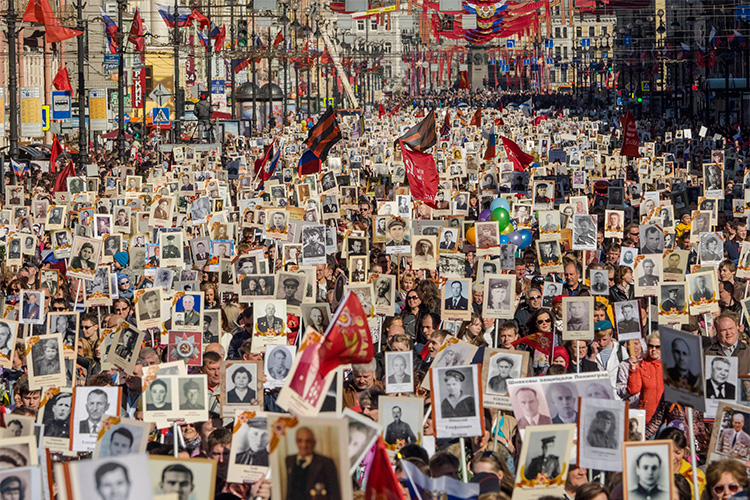
One of the claims of the current regime in Russia is that there is no alternative to Vladimir Putin as a leader or to his regime as a political system accepted by the majority of the Russian people. Deputy chief of staff Vyacheslav Volodin famously encapsulated this vein of thinking when he said, “There is no Russia today if there is no Putin.”
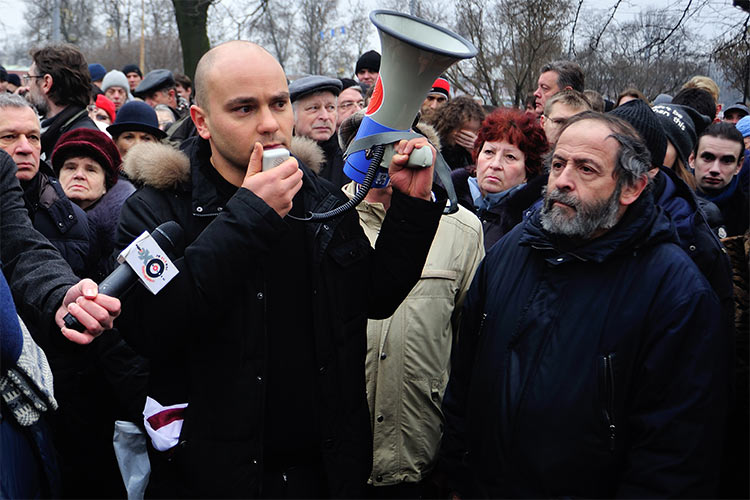
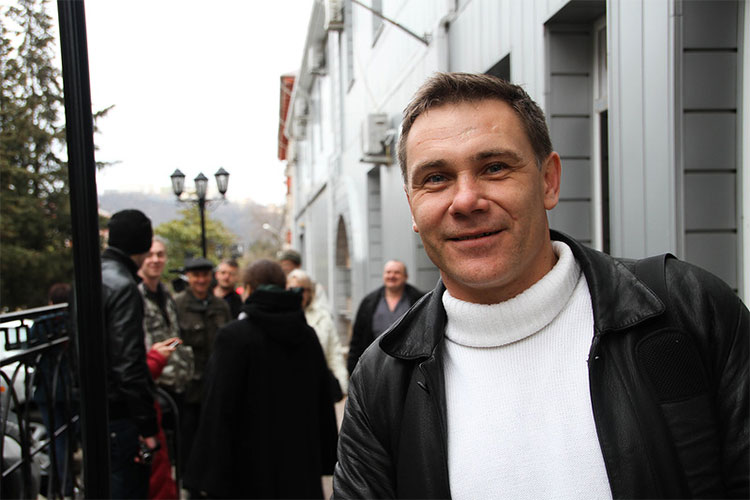
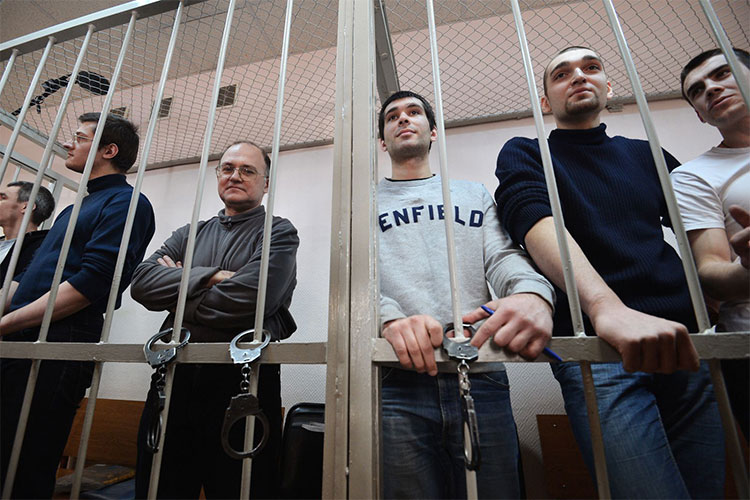
At IMR, we believe that this thinking is wrong. An alternative to the regime does exist, but over the last decade, the regime has managed to marginalize it by destroying and vilifying the democratic opposition, silencing dissenting voices, and repressing the protest movement. Still, the opposition is often criticized for not offering a viable and comprehensive alternative plan for the country’s future—an agenda that would effectively counter the Kremlin’s narrative.
The Institute of Modern Russia has decided to address this issue. This year we’ve launched an initiative that would essentially change the agenda by developing a reform program for post-Putin Russia to facilitate democratic transition and help the country become a prosperous state based on the rule of law. As a first step within this initiative, a group of Russia’s leading constitutional law experts prepared the report titled “Constitutional Crisis in Russia and How to Resolve It,” a profound work that dissects one of the country’s acutest problems—the erosion of the democratic essence of the Russian Constitution—and provides possible solutions.
The second report of the series, titled “Russia’s Healthcare System: Current State of Affairs and the Need for Reforms,” outlines the dire situation in the country’s healthcare and offers policy solutions that can facilitate the much needed change.
The latest report focuses on Russia's economy and is titled “Demonopolization of the Economy as an Axis of Russia’s Future Reforms.” It provides a profound analysis of the fundamental problems facing the country's economy and offers a blueprint of potential reforms.
In the future, we plan to address other grave issues, such as reforming Russia’s judiciary, law-enforcement, military, and pension system.

- Details
- Projects Archive
Policy Analysis and Research
- Details
This project aims to inform and educate policymakers, media, and think tanks on relevant issues in Russian politics by producing in-depth analysis, research papers, and policy recommendations.
As part of this project, IMR and the Legatum Institute (London) jointly commissioned a series of studies to analyze the challenges of Russia’s transition from the former Soviet Union. The first paper of the series was a study of Russia’s postmodern dictatorship, and subsequent works were dedicated to corruption issues in Ukraine, Georgia, and Moldova. IMR worked with its sister publication The Interpreter to produce an 88-page report titled “An Invasion by Any Other Name: The Kremlin’s Dirty War in Ukraine,” the most comprehensive compilation of evidence on the war in Ukraine to date.
One of our most acclaimed reports is “The Menace of Unreality: How the Kremlin Weaponizes Information, Culture, and Money,” a study of the Kremlin’s disinformation war and propaganda efforts. Authored by two prominent journalists—Michael Weiss and Peter Pomerantsev—it’s been extensively cited by the media, politicians, scholars, etc.
IMR has also been collaborating with the Political Capital Policy Research and Consulting Institute (Hungary) on a study identifying the relevant connections between the Kremlin and Europe’s far right and far left forces. And, as part of the project titled “Faces of Patriotism,” we have partnered with the Levada-Center, a Moscow-based independent pollster, to conduct a number of public opinion surveys that were included in the recent paper on Russian understandings of patriotism.